Losing Faith, Gaining Trust

Our culture – and so many of us – are at the breaking point,
stressed by personal, family, and work-related societal demands
and realities. It is no wonder that we may have dismissed a more
spiritual approach to our life. Perhaps it is because of a tendency to
intellectualize and hold rigid opinions, or to follow a philosophical
or political ideology that forsakes all else. Some of us have lost faith
because of our society’s social and educational institutions, or our
struggles and misunderstandings with our families, or how we interpret
our past. We may have lost faith in religious institutions and
communities as we have watched them fight and fail to be the models
of change, growth, and integrity that we long for them to be. Some
of us have become exhausted and overwhelmed by the sheer complexity
of postmodern life and all its demands, invitations, and its
endless possibilities in this complex age of hi-tech and social media.
Moreover, we may have been conditioned by our families, our
friendships, our chosen communities, and our culture not to value a
greater spiritual awareness, whether through a particular religious
philosophy or a set of nonreligious beliefs. Maybe because of our
negative religious experiences or cynical thinking about religion, we
have chosen not to seek the experience of spiritual enlightenment in
our lives. Or our outlook on life has been shaped by our despair over
political and economic systems that have led to continued war, poverty,
oppression and division.

It’s important to remember that to embrace the spiritual life, we
do not have to suddenly abandon or judge who we have been, or the
reasons for the important decisions we have made, or our essential
beliefs, points of view, deepest feelings or otherwise. Instead, we can
begin to trust this: no matter where we are, we can begin right where
we are.


Tending to one’s spiritual life is countercultural, even in some religious
communities. It is so difficult when so much of life points to the
surface of things – like conforming blindly rather than searching
inwardly for answers. Seeking the authentic self and exploring whom
we are called to become is either not honored, or not in the minds of
most people. It seems to me we all have difficulty finding a way of
life that allows spiritual and human love to flourish, of being faithful
to our responsibilities and finding that inner path of purpose that
only we are meant to find. One reason could be is that we’re so busy
doing for others (including our work) but we are neglecting ourselves.
Unfortunately, this is one of the deeply ingrained norms in our culture.

Consequently, self-care will initially feel selfish to many of us.
Reprioritizing our time allotments with family, various causes, communities,
volunteering, recovery work, overworking and so on, may
become necessary for us to be able to sink into what is most deeply
drawing the attention of our soul. Doing this may present another
obstacle: if we do not risk others’ disapproval, we may never know
what that calling is. However, I’m convinced that discovering the
divine and our truest self are two of the most amazing, grounding,
and life-changing choices we will ever make.

Questions for Journaling

  1. What is your idea of a spiritual path? Can you find an image
    in a book, magazine, online blog or website that speaks to your
    sense of what a spiritual path may embody for you? Does this
    image give you a metaphor you can work with? Journal your
    thoughts, identifying the characteristics of your desired spiritual
    path.
  2. Write as many personal questions as you wish. (Examples might be: Why do I feel so unhappy? What am I longing for? How can I get there?) Take time to journal your responses each day but remember the amount you write is not the goal. Rather, try to get to the bottom of what you feel, think, or sense about the heart of these questions. Later, reflect and meditate on which question(s) seem to be the most important at this time.

“This is never a painless experience, but once we have committed ourselves to the search for truth, to seeing ourselves as we really are, we must see without judging what we see.”
~ Kabir Helminski, Living Presence

“The call of the pilgrim is to stay awake to our own patterns of life and death… When we feel the death impulse arising…. we can turn toward it with compassion…”
~ Christine Valters Paintner, The Soul of a Pilgrim

“Just as a candle cannot burn without fire, [we] cannot live without a spiritual life.”
~ The Buddha

Copyright © 2025 Jo-Ellen A. Darling. All Rights Reserved.

Going Deeper with Touchstones & Anchors


In Understanding Your Grief, Alan D. Wolfelt describes touchstones
as the “signs that let you know you are on the right path.” He considers
these markers also to be “wisdom teachings” – when relied upon
and practiced consciously – that prevent you from getting lost on the
journey. For example, one of Wolfelt’s touchstones is “Nurture Yourself.”
During grief or any major upset in our lives, it is an important
point to remember. Nurturing ourselves helps us value and find
compassion for ourselves, no matter what has happened. Self-care
strengthens our spirit as we find the courage to do whatever it takes
to find support and make healthy changes. Caring about ourselves
sends a signal to our souls that we are not abandoning ourselves, that
we are worth the trouble, and that we won’t let ourselves completely
lose the way.

Being in a state of unknowing is not the same as losing our way.
When we’ve lost our way completely, we probably have been abandoning
ourselves for a long time. On the other hand, a place of unknowing
can include waiting for clarity or the next thing to be revealed. We
may or may not already have a sense of direction of where we’re heading,
but we may have a sense of trust and peace, nonetheless. In the
frame of self-care, we’re more likely to see our options more clearly:
what we can and cannot do, what we need to surrender, and what we
might decide to do now or later. Journaling our experiences and returning
to their important lessons will provide a pattern of unfolding
that begins to show us how the Divine operates in our individual lives.

In psychology, an anchor traditionally refers to a memory that continues to illicit pain. In going back, you have an opportunity to see yourself with compassion instead of the old ingrained judgments that continue to speak and generate fear around that time of your life, such as: “You’re bad” (i.e., I’m stained for life); “You’re not worthy of this love” (wait until they see the real me); “You really messed up” (I will never be whole); or “You will never get over this” (I will never experience freedom from this).

Continue reading “Going Deeper with Touchstones & Anchors”

Loss, Grief, Joy and Grace in Spiritual Growth


If a person keeps growing, his or her various false selves
usually die in exposure to greater light
.”
~ Richard Rohr, Immortal Diamond


From birth until death, our lives go through continuous seasons and cycles. This is not something we necessarily learn consciously, but if we’re in the habit of examining our own lives and feeding our souls with good spiritual nurture, it is a truth that is hard to miss. Our awareness and acceptance of the life and death cycle sometimes comes through difficult or tragic events and experiences that bring us to our knees. Perhaps it’s the surprising joys and blessings we receive and wholeheartedly embrace, such as becoming a parent, or finding a loving and committed partner. Maybe it’s coming to the realization that a career choice – or choice of voluntary service – is really a vocation after all.


Consider the adage, “This too shall pass.” It is a common phrase that is often used when we experience difficulty. But life requires us to acknowledge that even the joyful times that we experience will one day change. Sometimes the big difficulties and joys occur while we’re young; sometimes they happen much later in life. I have a brother who unexpectedly became a loving parent for the first time in his forties, and a sister who met the love of her life in her fifties. These experiences both surprised and blessed them. Yet, I also think of the men, women and children who had no spouse, mother, father or other family member returning home on September 11, 2001, when United Flight 93 crashed, the Pentagon was bombed, and the Twin Towers fell in New York City. No matter the circumstances – sorrowful or joyous – these times will inevitably change us and become humus for our further growth.

The longer we practice our journaling, the more likely it can and will shift us toward a more spiritual focus: the stuff of our lives will be mulched into a living garden of experience. Gains and losses in all areas of life will be the soil of our experiences, and these will inform our next steps – our decision making. The years of decisions will carve our lives into distinct seasons: work and love that is satisfying and/or turbulent; losing or finding our way and eventually waking up; and perhaps a decision to embark on a more intentional season of growth. Growth may come in spurts or may seem to peter out altogether. These dead ends may feel discouraging or depressing. Yet, if we continue the search, we will find our way again – and again and again. Even times of unproductivity and unrealized dreams can be the fuel for our continued growth: what we lost or gave up will open the space for something new.


Questions for Journaling

  1. What season of the lifecycle are you in now? Which stage have you just relinquished? How did it prepare you for what is happening now or coming next? What strengths have you gained? What did you have to let go of to be here now? Is there anything else that you need?
  2. Which metaphors in nature can you use to write a parable or description of what is happening to you? Write that story.
  3. What do you need to let go of now? Can you make space for something new to emerge? What does that look like? Can you be patient with yourself, yet gently persistent and faithful in your seeking?
  4. To whom, what or where are you being called now?
  5. To whom do you truly belong?
  6. Where does love want to take you? Where is the spark of new life leading you?

Copyright © 2022 Jo-Ellen A. Darling. Excerpt from Journaling as a Spiritual Path: A Journey to Your True Self and the Divine | All rights reserved.

Nature: A Spiritual Teacher

Recently I finished reading John Philip Newell’s book, Sacred Earth, Sacred Soul. Newell digs into Celtic history and illuminates an amazing group of Celtic writers, poets, activists, saints, and naturalists who have contributed to an understanding of Celtic Christianity. Adapted from some of the life-giving rituals of pre-Christian pagan culture, Celtic Christian theology holds that matter and spirit are interconnected and thus offer us a model of how we can be and live in the physical world and with each other. In other words, how we treat the Earth and each other flows and determines the spiritual path we are on: one that is lifegiving, indifferent, or destructive. This lifegiving theology — that matter and spirit are intertwined — is critical to our world today because it can shape how we see God, Spirit or the Divine (and how we believe that God, Spirit or the Divine sees us), even if we are not religious.

When I’m in nature, I find myself more easily yielding to the God of my understanding. I receive instructions and wisdom for my life as I gaze on landscapes, trees, sky and critters. I’m astounded by what God shows me in these moments.

I have found that nature is always reflecting back to me who I am.

During a time of silence at my favorite retreat house a decade ago, the following insights arrived even before I unpacked my bags and watched a hawk with wonder from my bedroom window:

“I go to my room and open the large window overlooking the west lawn. A red-tailed hawk quickly catches my eye as she soars close to the building in the billowing airwaves that rattle through clumps of leaves on the age-old oaks. The hawk was totally playing, I could tell. She wasn’t looking for food or anything, just enjoying the ride: letting go and doing what she’s made to do – enjoying the currents that God had supplied for her amazing wings! I wonder: why don’t I do this more? Why don’t I let go and let the flow of my God-given life and gifts move me naturally, like the wind lifts the hawk without any effort on her part — except to spread her wings and be willing to go up! In that moment, I decided that I want to trust God and life more, like Red-tail trusts her wings and the wind!”

From watching Red-tail, I was suddenly faced with the relationship between trust and freedom: trusting that my aliveness had purpose and that my purpose could only be found and lived if I was in a state of spiritual freedom.

A more recent time in my life is illustrated in the following allegory that I wrote when I was contemplating “what was next” while spending time at a favorite local park:

“Four Canada geese stand at the helm of a waterfall in Monocacy Park where I often go to be, to pray, and to reflect. I am sitting on their level in a stone pavilion, off to the side. The senior goose walks along the slanted, slippery grade to the edge of the falls, about 12-foot high. She announces her intention in loud bouts of honking and easily flies over the falls and into the white frothing stream below. Soon after, two of her sister geese follow … but a third holds back.

This lone lady bird walks tentatively along the slanted upper precipice, as if not sure she should follow her sisters. Looking around, she eventually begins to honk — anxiety and courage like two strong wings rising inside her. Upon reaching the waterfall’s edge, she steps back. In the next moment she moves again to the edge and stretches out her long neck, only to pull back again. I watch her for four or five more minutes with amazement. By now I notice the other three geese are downstream and out of sight.

I continue to watch as she struggles to let go. Several times she moves back and forth along the slippery concrete slab and gushing water. Then, as my own mind drifts quietly, she spreads her wings and sails downward over the falls, landing in the rapids and bobbing downstream between a few boulders, eventually out of sight.

I wondered: “Where will the stream take her?”

At the time I wrote “The Monocacy Geese,” I was in a period of some tension as I sought to find new direction in my life. In retrospect, rereading the Monocacy Geese allegory reveals something new. As I watched this ambivalent bird finally summon the courage to fly over the dam – as I hoped she would eventually – I now see that I eventually gave myself permission to follow the guidance that was coming to me regarding my own writing and the eventual publication of my book, Journaling as a Spiritual Path.


When I allow myself to spend time in nature, I can become truly one with the Spirit and one with myself. This is a gift of wholeness: my recognition that I am as much a part of nature as nature is deeply part of me. When I journal what I notice in nature, I take in the wisdom that is being mirrored to me, as nature is always reflecting back to me who I am. This produces spiritual growth in my life, a breakthrough in how I see the divine, myself and the world. These two spiritual practices of spending time journaling and spending time in nature can truly transform me. 

Questions for Journaling: What are your favorite local landscapes? What spiritual qualities do they have? Can you spend time there and see what Nature and Spirit want to show you about yourself?

What is standing between God and me today?

This is a typical question posed by many religious and spiritual writers. Oftentimes it aims to help us identify our sin. But I wanted to take a different look at this question, to answer it in a way that is perhaps more hopeful and life-giving.

At first look, what stands between God and me today is my focus on smaller things, like a new kitchen island and the details I need to document in a retreat I’m giving in July. It’s my to-do list, which is never finished and seems to grow longer with each passing day. It’s my distractedness with searching on Google and praying spontaneously for others on any given day. It is my addiction to reading something political first thing in the morning. It’s my need to balance my self-care with caring and doing for others. And yet …

As I’ve grown in my spiritual journey in the second half of my life, I can see that God is part of all these things. Like my deep gratitude for that kitchen island which we waited almost three years to get. Like the aliveness I feel as I hone in on the details of the retreat so that others can have the greatest opportunity to experience the joy and surprise of Spirit! Spirit is constantly present in my to-do-list as she helps me set its priorities, usually with people’s needs – including my own – near the top of that list. God is even in my Google searching as I come to understand things better and not be so afraid, such as my recent diagnosis of macular degeneration. And for sure, it is God that brings to mind and kindles my desire to pray for others. I sense that God cares about the political and social landscape I read about each morning, calling me to think about the issues and what part I may take in them, and that it is God for sure who reminds me not to neglect myself, for how can I serve others if I do not have a will to manage my own needs and self-care? And as far as constantly thinking about things I need to be doing rather actually doing them? Well, that could be God helping me to sift through all the demands in my life, guiding me on which things to release and which are truly the most important things, such as organizing a brunch for a dear friend who is moving across the country, and planning a party for my mom’s 88th birthday – even though I have a thousand other things to do.

So, what is standing between God and me today? I think it boils down to this:

It’s the poor, good, or even better choices I will make; the opportunities I will miss, embrace, or intentionally ignore; the awareness I will have and the presence I will give to others, self, and God – or not. It’ll be the present moment at which I stand, the sacred space which I am ever invited to recognize, and the love that Spirit is always offering in any situation. Together God and I discern the way, and at times I make mistakes – even regrettable ones – but even those God can turn around. Because I have learned that God can use all for good.

So the most important choice I can make today is to get out of living “solely on my own” and join God in the great dance of living my life.

Thinking About Journaling in 2023? Read on …

Journaling is Primarily a Labor of Self-Love 

Journaling is a way to stay close to myself and to the God of my understanding. It is loving  myself enough to want to engage in the deep mystery and truth of my own self, not only things  of the past, but in the here and now. Knowing and recovering myself takes commitment. This  requires me to explore my basic wants and needs, my wounds and mistakes, my joys, gifts and  desires, and my relationships. I’ve needed to dig deeply to find my past and present yearnings  for clues, such as those I had when I was a child and young adult, and what it is I dream about now, even if I think I cannot attain it fully in the present. 

In the early years of my contemplative spiritual formation, I was invited to explore a  relationship with God by spending time in nature. Journaling in nature becomes contemplative  when I reflect on the mystery, awe, and wonder in the natural world. I’ve come to deeply know  that all of us – and all created things – are carriers of God’s light in the grand incarnation.  

My sense is that God never becomes unavailable, never stops facilitating our growth, and never  gives up on us. We can be awakened at any moment, and our journals will ground us in the  present, holding all the many threads, lessons, insights and experiences that have made us who  we are today. 

Journaling is Countercultural 

Over the years, I’ve found that tending to myself and my spiritual life is countercultural – even  in some spiritual and religious communities. Part of the difficulty is that so much of life is  geared to explore things outside of ourselves, often at the expense of searching inwardly for  answers. Being faithful to our responsibilities and finding that inner path of purpose that only  we are meant to find, isn’t easy. One reason could be is that we’re so busy doing for others that  we’re neglecting ourselves.  

I remember when self-care initially felt selfish. Yet, reprioritizing my activities became necessary for me to be able to sink into what was most deeply drawing the attention of my soul. Taking time to discerng my priorities also presented another obstacle: I was afraid to risk  others’ disapproval. Yet by committing to the process of journaling, my callings and my own  transformation continue to be revealed. 

Journaling is an Act of Radical Self-Care 

Nurturing myself helps me value and find compassion for myself, no matter what has  happened. Self-care strengthens my spirit as I find the courage to do whatever it takes to find support and make healthy changes. Caring about myself sends a signal to my soul that I am not  abandoning myself, that I’m worth the trouble, and that I won’t let myself completely lose the way.  

Being in a state of unknowing is not the same as losing my way. When I’ve lost my way  completely, I’ve probably abandoned myself for a long time. On the other hand, a place of  unknowing can include waiting for clarity or the next thing to be revealed. I may or may not  already have a sense of direction of where I’m headed, but I usually have a sense of trust and  peace. In the frame of self-care, I’m more likely to see my options more clearly. Journaling my experiences and returning to their important lessons provides a pattern of unfolding that  begins to show me how the divine operates in my life.  

Journaling Helps Me to Mourn My Losses 

A wise therapist once told me, “The way you get through trauma is to process it.” So it is with  sorrows, and maybe especially those I have not yet mourned. Grief is the pain inside us and mourning is how we give voice to that pain. An accompanying journal is one way that provides  the sacred space and time for mourning my grief; it allows me to plan what I need to do to take  care of myself during this important season, and to savor the growth and healing that follows.  Keeping a journal, attending bereavement groups, contemplative prayer groups, 12-step groups and individual therapy, as well as talking with soul friends, spiritual directors and spouses, are  ways to mourn and process grief with others.  

Journaling Helps Me to Find My Voice 

Through the process of inward listening and journaling, my spiritual growth is sustained.  Journaling strengthens my voice. My voice is an extension of the listening I do and the true self I  am discovering and living into. Not everyone will agree or approve of our voice, but we’re  learning that this is not as important as it used to be.  

Regular times of silence and solitude provide a way to listen and find my voice. Over the years,  my voice has become more consistent – both stronger and more authentic – by the surprising  discoveries I’ve made about life, myself, God, and others. As our lives unfold in and outside of our journals, we will know the places where we can no longer compromise, as well as the  places where we need to be challenged to grow. I’m convinced that discovering the God of my  understanding and my truest self are two of the most amazing, grounding, and life-changing  choices I will ever make.

Copyright © Jo-Ellen A. Darling. All rights reserved.


My List of What Journaling Can Give Us

Since we’ve catapulted into 2022, some of us are once again in some measure of lock-down, as we deal with a renewed spike of the Corona virus. Yet, we are learning that this is the “new normal” and we must work at living in the pandemic without closing ourselves off totally to friends, schools, workplaces, appointments, etc.

Being a big believer in the journaling process, I think it’s a perfect time to try it out and keep it going as we hunker down to winter and wait for signs of spring. Chapter 1 in my book has plenty to say about that, but today I want to give you a list of the many benefits journaling can provide — whether you see it as being connected to a spiritual path or not.

I suggest you meditate on these ideas as you begin writing. Write even a single sentence per day — what is important to you, bothering you, what you need, or what is sustaining you through this time.

My list of what journaling can provide:

  • A place to share your honest and deepest thoughts and feelings
  • A regular practice of checking-in with yourself
  • A growing conscious awareness of what is happening in your inner world
  • Insight into your life and who you are becoming
  • The discovery of your True Self
  • A way to honor what has happened in the past while planting yourself firmly in the present
  • A place and time to release your tears
  • A way to recognize and honor your deepest longings
  • A path to find compassion not only for others, but also for yourself
  • A path to finding the freedom and courage to be who you really are
  • A place to figure out what you need and want

In addition, journaling:

  • Enables you to become committed to yourself and your own life
  • Gives meaning to your life by reflecting what is important to you
  • Can help you to release fear-based thoughts, feelings, and perspectives
  • Can be used as a spiritual tool for life
  • Provides touchstones to authentic spiritual experiences, such as when you connect with a higher power in your life

Questions for Journaling:

  • What is causing you the most stress?
  • What do you need right now?
  • Can you give even a part of that to yourself?
  • How are you going to do this, i.e., what steps do you need to take? What risk are you willing to take to give yourself what you need?
  • Who or what can help you with this?

“At this critical juncture, it may be important to stop pushing yourself. You may need to take a break and give yourself time to heal.

You don’t have to give up every-thing, but you probably need to figure out what takes priority in your life.

Everyone’s circumstances are different.

Only you can name where you must continue to give, as well as where you must, or are able, to let go.”

Chapter 3, Figuring Out What You Need, p. 88

Copyright © 2022 Jo-Ellen A. Darling

Gratitude: The Main Staple for Thanksgiving

Gratitude is not only one of those necessary staples of the spiritual life, it is the centerpiece of the feast that we can practice on ANY given day, not just on Thanksgiving. We can feast on gratitude anytime and always — when life is going badly or when it’s going great.

Having gratitude for “what is” also teaches us humility in a real sense: we can’t always change the circumstances in our lives or the lives of others, so we surrender and accept the reality that we have little control of other people’s choices in life. In letting go, we feel the blessing of transcending our problem-thinking and compulsive ways of behaving in the world. Many have come to know this as grace – a blessing from a higher power — a state of mind we know as serenity.

Gratitude is like gravity in the spiritual life: it grounds us to something deeper than what we normally see. Gratitude gives us eyes to appreciate our own lives and what we already have. There is ALWAYS something we can be grateful for. Practicing gratitude is a way to seeing what is truly important. This can affect how we prioritize our life: to whom we need to lend a hand, to what causes we want to give.

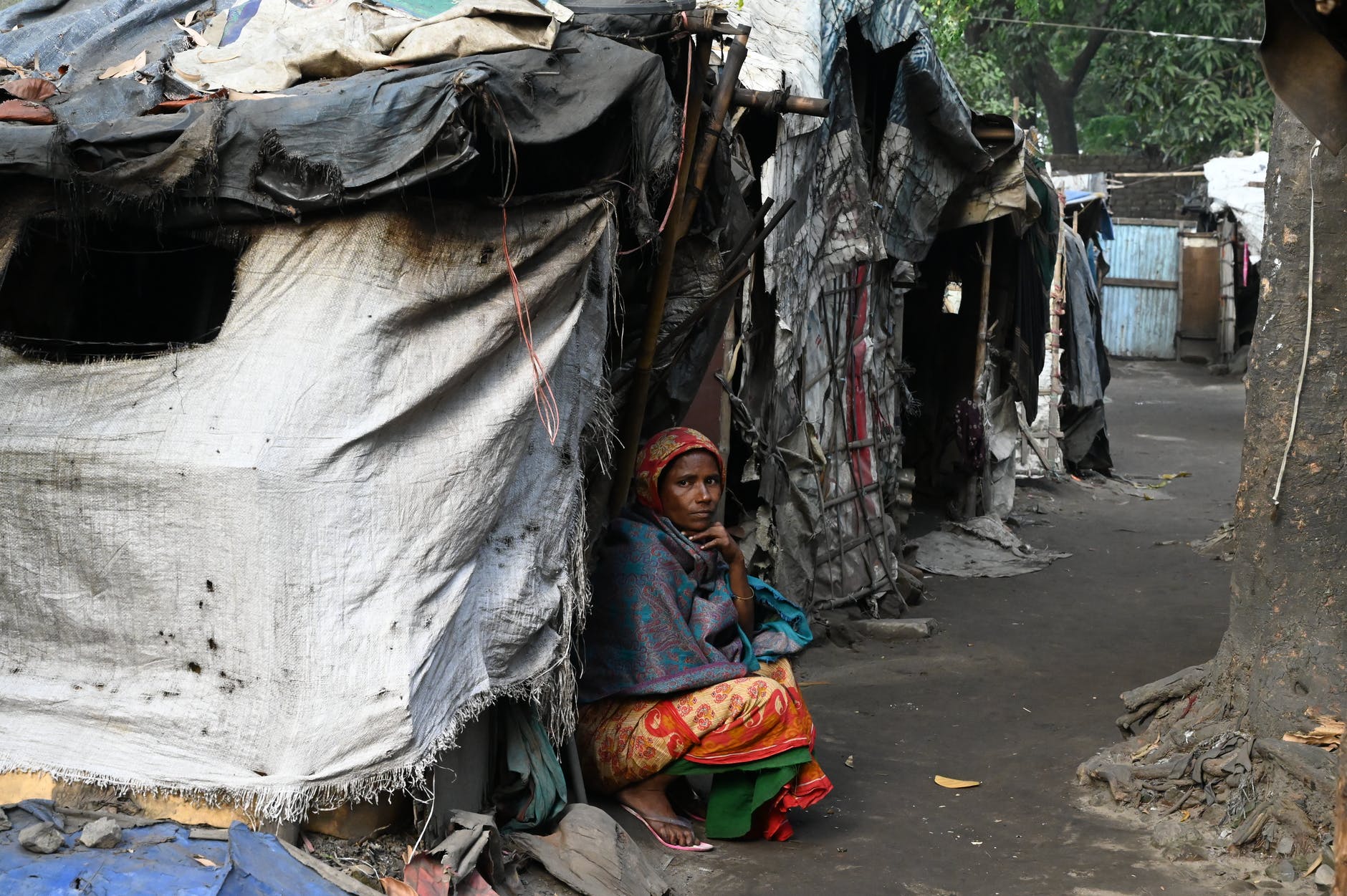
Photo by Mumtahina Tanni on Pexels.com

This year, my husband and I are giving to the World Food Program, the food assistance branch of the United Nations headed by Executive Director David Beasley (see link below to read his 60 Minutes profile). Put yourself in the shoes of people living in conflict: besides not enough food to eat, poor hygiene, water systems, medical care, and every other type of assistance we take for granted are completely out of range for these civilians. They surely can’t survive without food.

Beasley is often on the frontlines of famines and food insecurity the world over. Right now the people of Yemen, Ethiopia, and Afghanistan are in trouble and he and the United Nations workers are doing what we are unable to do. But there IS something we can do.

As we sit down to eat this holiday, let’s remember all those who are food insecure and remember how incredibly fortunate we are to take our meals for granted. Please give to your local, national, and international food banks this holiday season.

A Blessed Thanksgiving to You and Yours,

Jo-Ellen

https://www.wfp.org/

https://www.cbsnews.com/news/when-food-is-used-as-a-weapon/